About
I am a PhD candidate in Machine Learning and Data Science at the Department of Mathematics and Statistics,
 Georgia State University,
advised by Professor Li-Hsiang Lin.
I received my M.S. in Joint Statistics and Computer Science from
Georgia State University,
advised by Professor Li-Hsiang Lin.
I received my M.S. in Joint Statistics and Computer Science from
 Purdue University,
where I worked with Professor Qi Guo on computer vision. I completed my B.S. at
Purdue University,
where I worked with Professor Qi Guo on computer vision. I completed my B.S. at
 National Taiwan University
under Ku-Wei Liao on reliability engineering.
National Taiwan University
under Ku-Wei Liao on reliability engineering.
Before my PhD, I was also a graduate research assistant with Professor Henry Horng-Shing Lu, working on deep mixture density networks. My current research interests center on the following themes:
- Statistical modeling and uncertainty quantification for high-dimensional modeling.
- Interpretable and non-parametric machine learning methods.
- Learning, evaluation, and auditing for large language models.
- Optimization problems in finance and portfolio allocation.
-
Jun. 2026
💼 I will start my internship at
 JP Morgan Chase as a Data and AI PhD Researcher Intern
focus on "Language-based transformer on heterogeneous tabular data" in Palo Alto, CA.
JP Morgan Chase as a Data and AI PhD Researcher Intern
focus on "Language-based transformer on heterogeneous tabular data" in Palo Alto, CA.
- May. 2026 🏆 I am selected as a recipient of Wiley M. Suttles Mathematics Scholarship.
- Apr. 2026 📰 Our work Deep P-Spline: Fast Tuning, Theory, and Application is accepted by Journal of the American Statistical Association (JASA).
- Aug. 2025 🏆 Deep P-Spline selected as winner of the SPES + Q&P Student Paper Competition. Presenting at JSM 2025 in Nashville, TN.
- Jan. 2025 🏛️ Attended the University of Florida Dept. of Statistics' Annual Winter Workshop (WW 2025).
Older news
- May 2023 📄 Presented a poster at Midwest Machine Learning Symposium (MMLS 2023) in Chicago.
-
Deep P-Spline: Theory, Fast Tuning, and Application
@article{hung2026deep,
  title={Deep p-spline: Theory, fast tuning, and application},
  author={Hung, Noah Yi-Ting and Lin, Li-Hsiang and Calhoun, Vince D},
  journal={Journal of the American Statistical Association},
  number={just-accepted},
  pages={1--28},
  year={2026},
  publisher={Taylor \& Francis}
}
Deep neural networks (DNNs) have been widely applied to solve real-world regression problems. However, selecting optimal network structures remains a significant challenge. This study addresses this issue by linking neuron selection in DNNs to knot placement in basis expansion techniques. We introduce a difference penalty that automates knot selection, thereby simplifying the complexities of neuron selection. We name this method Deep P-Spline (DPS). This approach extends the class of models considered in conventional DNN modeling and forms the basis for a latent variable modeling framework using the Expectation-Conditional Maximization (ECM) algorithm for efficient network structure tuning with theoretical guarantees. From a nonparametric regression perspective, DPS is proven to overcome the curse of dimensionality, enabling the effective handling of datasets with a large number of input variables—a scenario where conventional nonparametric regression methods typically underperform. This capability motivates the application of the proposed methodology to computer experiments and image data analyses, where the associated regression problems involving numerous inputs are common. Numerical results validate the effectiveness of the model, underscoring its potential for advanced nonlinear regression tasks.
JASA'26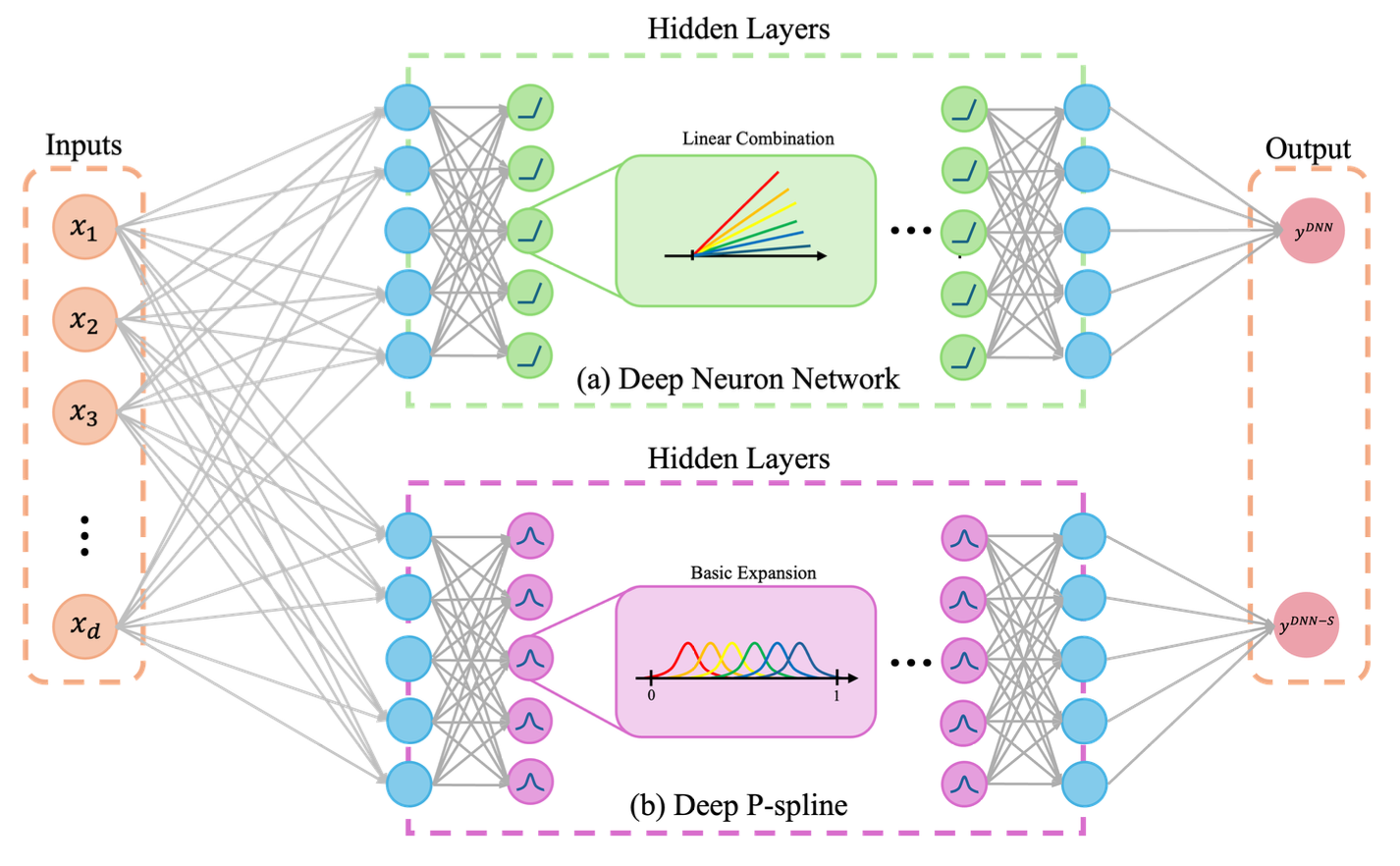
-
AURA: Adaptive Uncertainty-aware Refinement for LLM-as-a-Judge Auditing.
@misc{zhang2025aura,
  title={AURA: Adaptive Uncertainty-aware Refinement for LLM-as-a-Judge Auditing},
  author={Zhang, Zilong and Hung, Noah Yi-Ting and He, Weiyi and Ding, Lei and Chang, Junxi and Yeh, Chi-Kuang},
  year={2025},
  note={arXiv preprint}
}
Large language models (LLMs) are increasingly used as judges for open-ended generation, as large-scale human evaluation is often expensive and difficult to scale, yet their preferences remain imperfect proxies for human judgment. Existing auditing pipelines often assume that a reliable subset of examples or clean supervision signals are available beforehand, for example from human annotation, heuristic filtering, or the outputs of strong judges. In LLM evaluation, this assumption is fragile: the initial split may inherit judge bias, while human verification is typically too scarce to define stable groups at scale. We propose AURA, an adaptive uncertainty--aware refinement framework for auditing pairwise LLM--as--a--judge decisions under selected human verification. AURA iteratively learns a human-consistency signal, propagates reliable evidence, and prioritizes uncertain comparisons for human review. The key idea is to treat trust in a judge as a latent quantity that is progressively refined as evidence accumulates. We provide a compact formulation, a stable refinement procedure, and a comprehensive evaluation on both synthetic and real pairwise LLM-answer data.
arXiv'26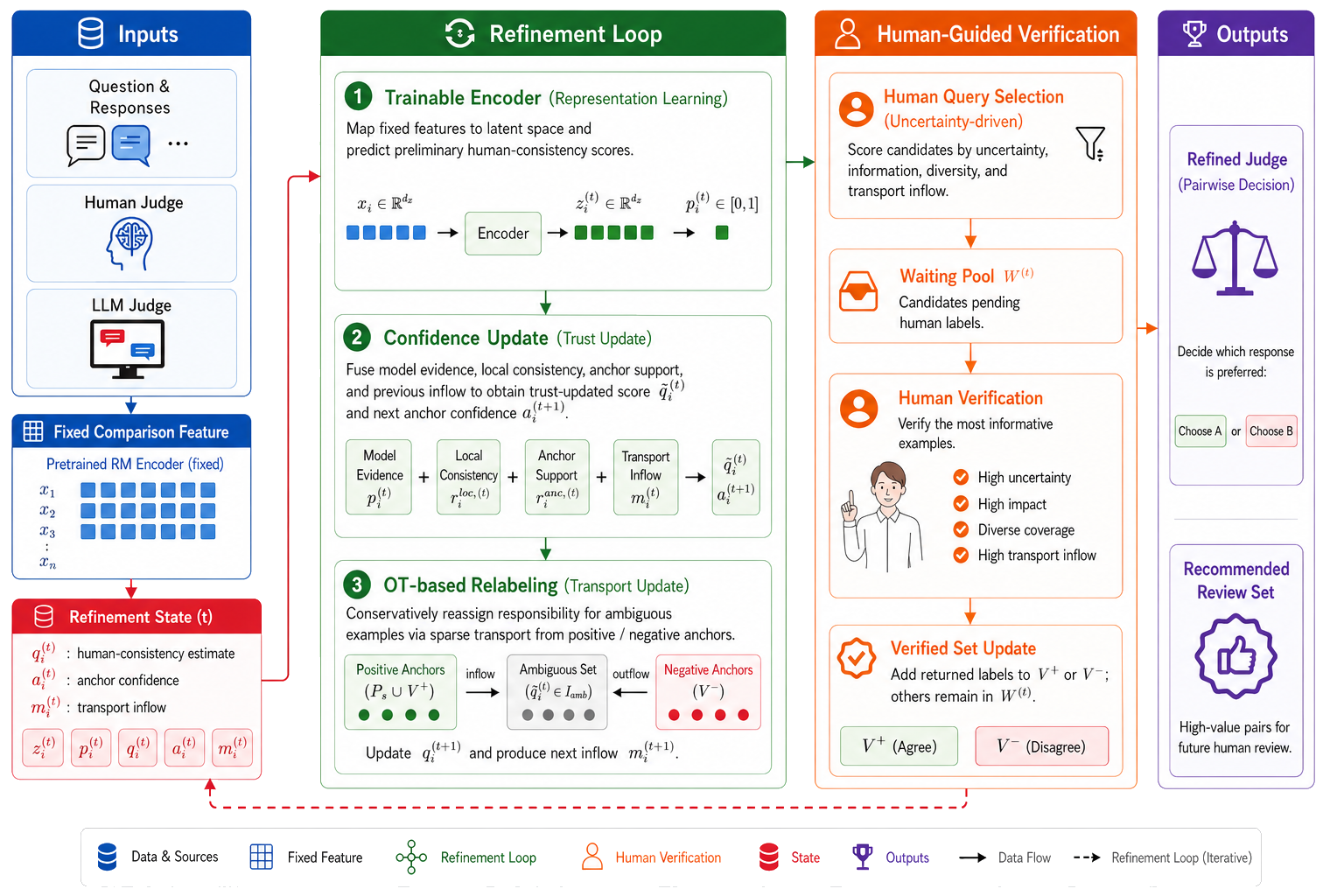
-
Quantifying and Auditing LLM Evaluation via Positive-Unlabeled Learning.
@misc{zhang2025llm_pu,
  title={Quantifying and Auditing LLM Evaluation via Positive-Unlabeled Learning},
  author={Zhang, Zilong and Hung, Noah Yi-Ting and Ding, Lei and Yeh, Chi-Kuang},
  year={2025},
  note={arXiv preprint}
}
Large Language Models (LLMs) are increasingly used as judges for scalable evaluation, yet such LLM-as-a-Judge systems exhibit systematic biases that are decoupled from semantic quality, most notably verbosity bias. Meanwhile, human supervision is costly and typically selective, yielding reliable positive judgments but leaving most outputs unlabelled and potentially mixed in quality. We formulate LLM evaluation under selective human supervision as a positive–unlabelled learning problem and propose a geometric auditing framework based on Partial Optimal Transport. By aligning a small set of human-verified positives with a reliable subset of unlabelled outputs in a fixed embedding space, our method identifies human-consistent preferences and corrects biased judges without retraining. Experiments demonstrate improved alignment with human preferences, increased robustness to presentation biases, and interpretable confidence estimates, offering a scalable and statistically grounded alternative to existing LLM-as-a-judge pipelines.
arXiv'26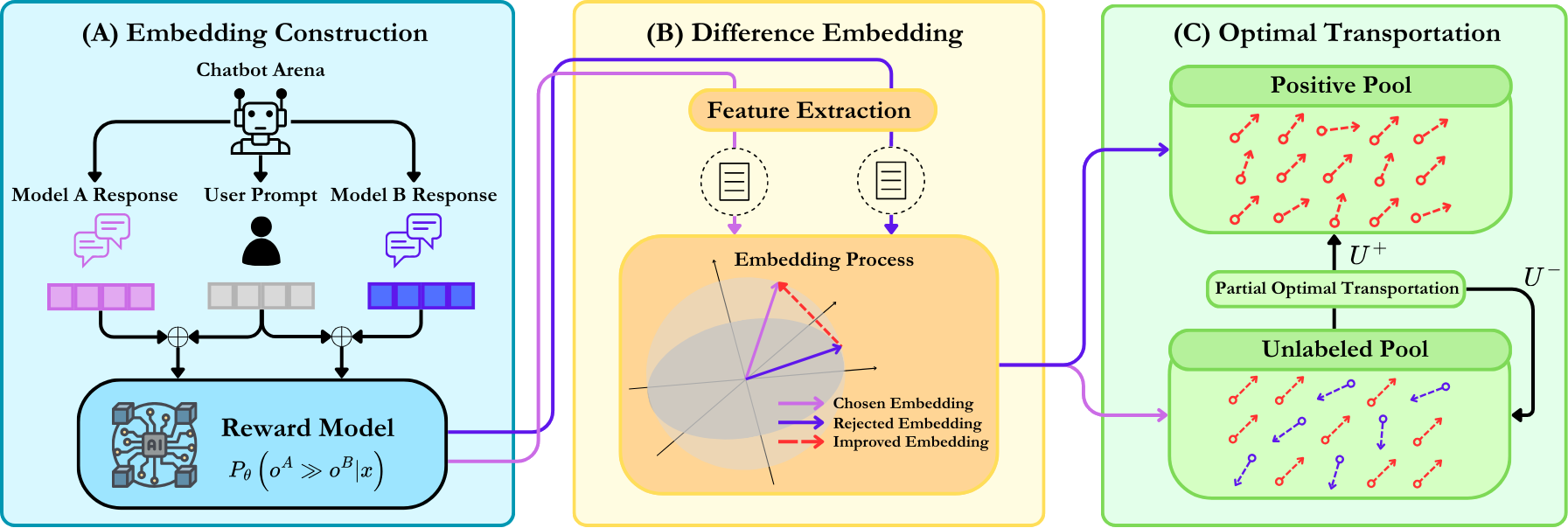
-
Sparse Deep Additive Model with Interactions: Enhancing Interpretability and Predictability
@article{hung2025sparse,
  title={Sparse Deep Additive Model with Interactions: Enhancing Interpretability and Predictability},
  author={Hung, Noah Yi-Ting and Lin, Li-Hsiang and Calhoun, Vince D.},
  journal={arXiv preprint arXiv:2509.23068},
  year={2025}
}
SDAMI combines sparsity-driven feature selection with deep subnetworks for flexible function approximation. Unlike conventional black-box models, SDAMI explicitly disentangles main effects and interaction effects to enhance interpretability while maintaining predictive power on small or moderate samples with high-dimensional features.
arXiv'25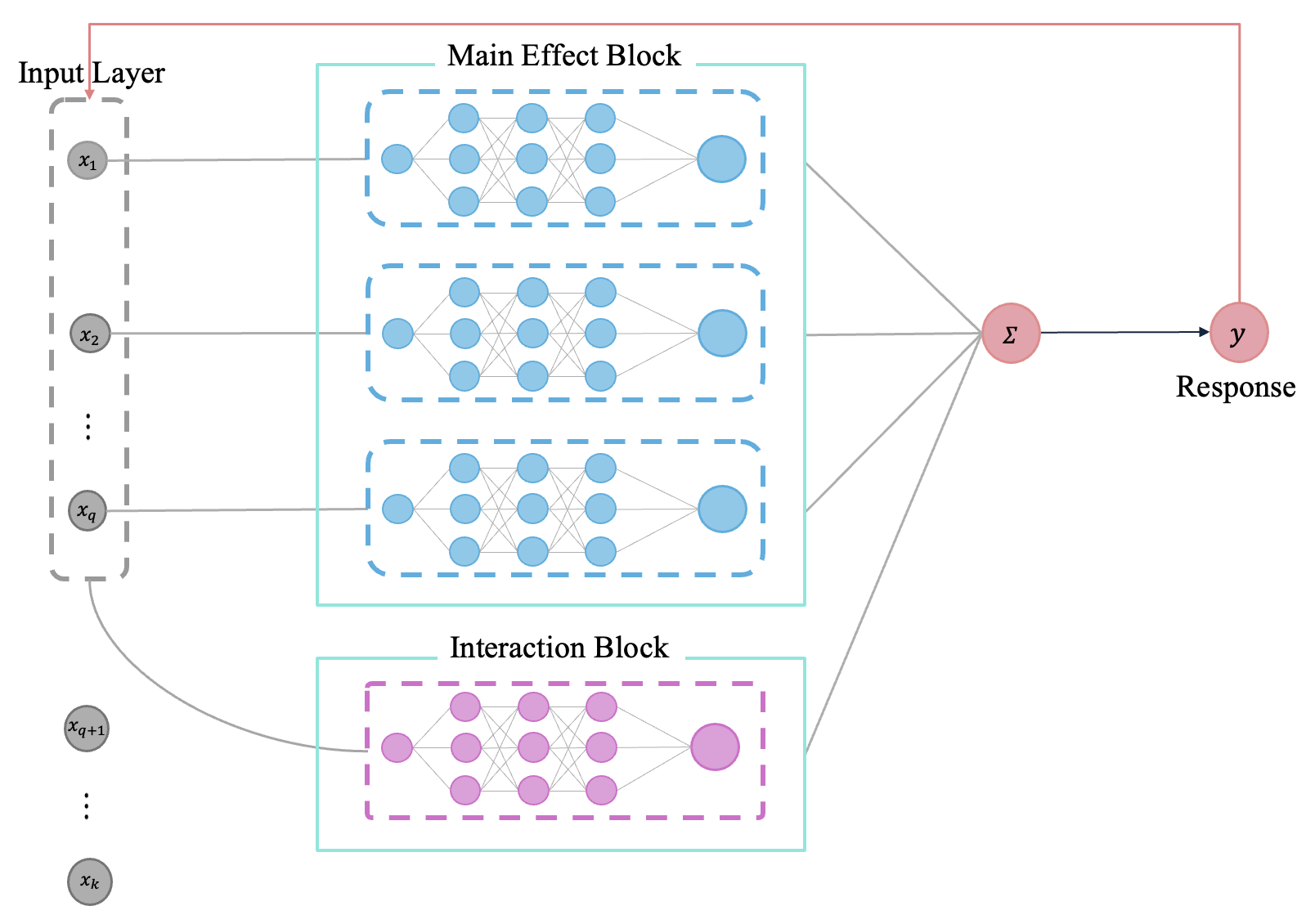
-
Semi-Markov Process-Driven Maintenance Scheduling for Tainter Gate System Considering Multiple Limit States
@article{thedy2025semi,
  title={Semi-Markov Process-Driven Maintenance Scheduling for Tainter Gate System Considering Multiple Limit States},
  author={Thedy, John and Liao, Kuo-Wei and Hung, Noah Yi-Ting},
  journal={Journal of Structural Health Monitoring},
  volume={24},
  number={4},
  pages={2031--2051},
  year={2025},
  publisher={Sage Publications Sage UK: London, England}
}
Adopting the Semi-Markov Process, which accommodates non-exponential distributions of state durations, to formulate optimal maintenance strategies for Tainter gate systems noted for prolonged dormancy and significant operational uncertainties.
JSHM'24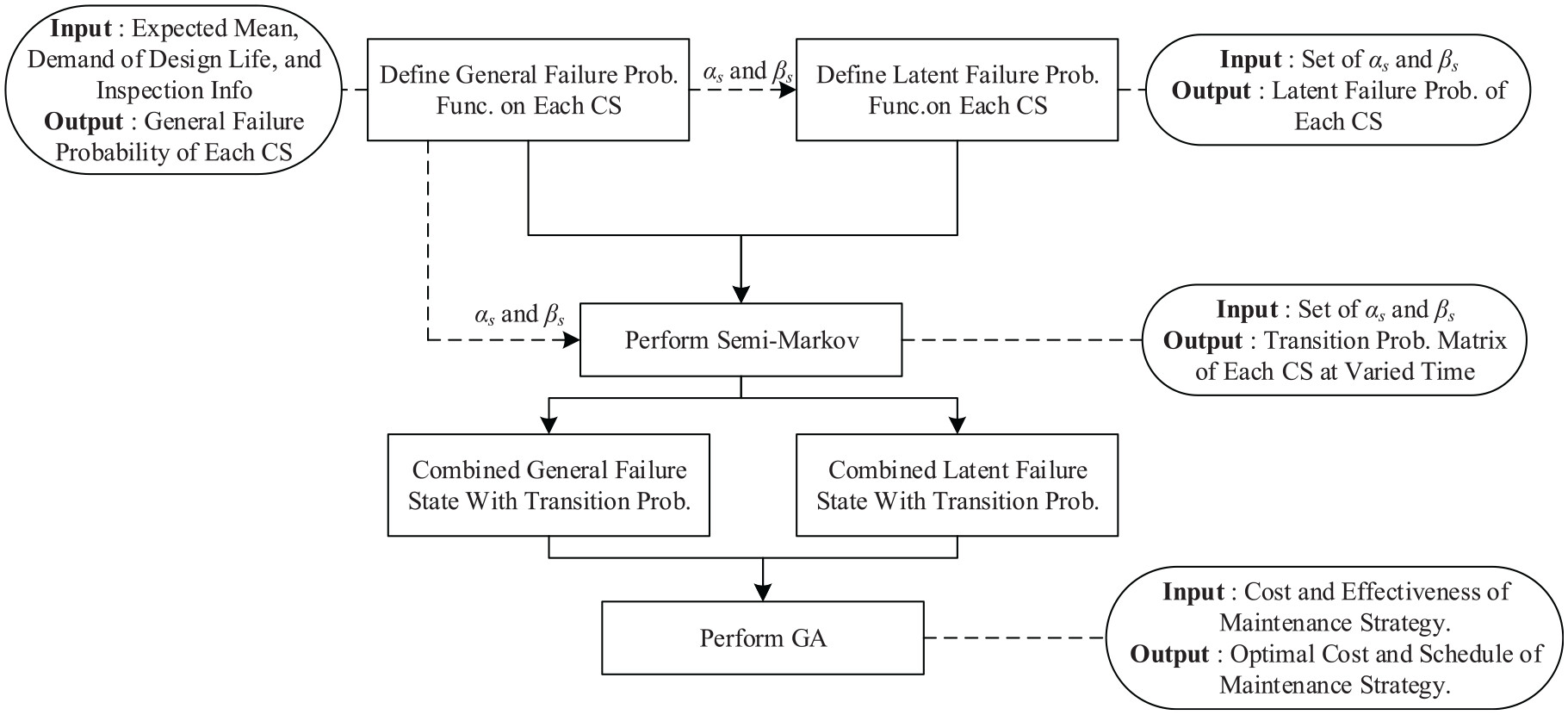
Drag to rotate · places I've lived, studied, and presented